News · Customer stories
Buy From Your Neighbors: What Two Spanish AI Startups Borrowed From San Francisco
Published 11/13/2026
Ask a San Francisco founder where their first customers came from. Often, the answer is: the startup down the street.
In Europe, we tend to do the opposite. We chase big corporates and buy the most popular software on the market. And we end up as one customer in a million.
This is the story of two AI-native startups in Spain that did it the San Francisco way: Piper and Shakers.
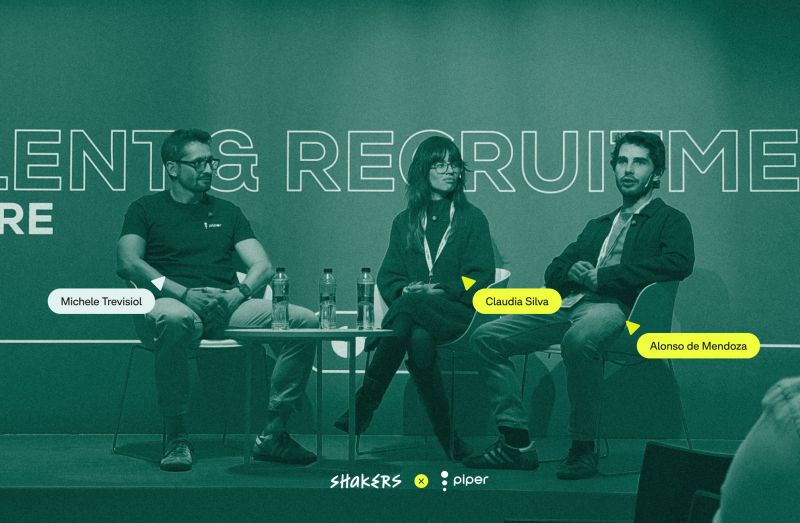 Michele, Claudia and Alonso at the Talent & Recruitment Theatre, Tech Show Madrid 2026.
How "San Francisco" does it
In Silicon Valley, buying from your neighbors is part of the playbook.
- Stripe's first 20 users all came from Y Combinator companies. The very first was a friend of the Collisons from their early YC days (source).
- YC says B2B companies often get their first 40–50 paying customers from the YC community (source). Founders meet on Bookface, YC's internal platform, to buy from and help each other.
- Brex was born from a YC problem. The founders couldn't get a corporate card, and "none of our YC batchmates could either." Brex then signed up most of its YC class (source). Years later, 60% of all YC companies were customers (source).
- The network keeps paying off after the batch. PostHog notes that growth-stage founders still reach out to them because of YC.
Why it works
Buying from a neighbor startup gives both sides something a big vendor can't:
- Speed. A warm intro, often from a local event, replaces a long sales cycle.
- Honest feedback. You talk to the founders, not a support queue. Your feedback lands on the roadmap.
- You both want the local scene to grow. Your reputations sit side by side. When the local scene grows, it attracts more attention and more funding.
- Product that fits. You shape the product while it's still moving, instead of adapting to someone else's roadmap.
- A second network. You build relationships that last. Every customer that is also a founder brings introductions, hires and advice.
Europe is starting to do it too
The habit is growing on this side of the Atlantic as well. Some ecosystems are ahead. In France, startups buying from and building with each other is already common. I see it as one reason French tech has scaled so fast at home and abroad.
- PayFit and Spendesk. Two French scale-ups that have integrated their products and grown alongside each other for years. When Spendesk launched its procurement product, PayFit became its first customer (source).
- Qonto and Pennylane. A neobank and an accounting platform that each integrate with the other, so customers can use both. They even compete on some products, and still choose to cooperate (source).
- The Spanish multiplier. Alumni of Cabify, Glovo, Job&Talent and Factorial have helped inspire over 300 new Spanish companies (source). Many of these new startups stay close and support each other. Success stories create more success stories.
The Spanish version: Piper and Shakers
Piper and Shakers are neighbors, and we mean it literally. In Madrid, Piper's old office was a short walk from Shakers. Today, Aircall's Madrid office is still close by. Both companies build with an AI-native mindset. Both were small enough to pick up the phone, or just walk over.
 Aircall, Shakers and Piper's old office in Madrid: a few minutes' walk apart. Map data © Google.
Shakers uses Piper. They started in Sales: meetings, calls and CRM updates. It worked so well that they extended it to People, for their own hiring. In every interview, Piper tracks what Shakers values in a candidate, both cultural and technical. That data flows through MCP into Claude and into their candidate pipeline. Other teams use it without touching anything by hand.
We worked very closely with them. The Shakers team is deeply technical, and they set a high quality bar. We wanted to meet it. So we ran joint sessions between their team and our engineers, and treated their feedback as a direct input to the roadmap. Several features got prioritized because Shakers asked for them. A demanding neighbor made Piper a better product.
Piper hires with Shakers. As their vendor, we saw first-hand that they were builders. So we trusted their judgment on technical profiles. We had been searching for four months. Candidates came in, but many fell short as interviews went deeper. Shakers shared several high-fit profiles within days. In two weeks, we interviewed five and hired two.
Shakers is also moving fast in one of the oldest and most complex sectors out there: hiring. They are building something new around how people work with AI. It's not public yet, but it's worth staying close to see what comes next.
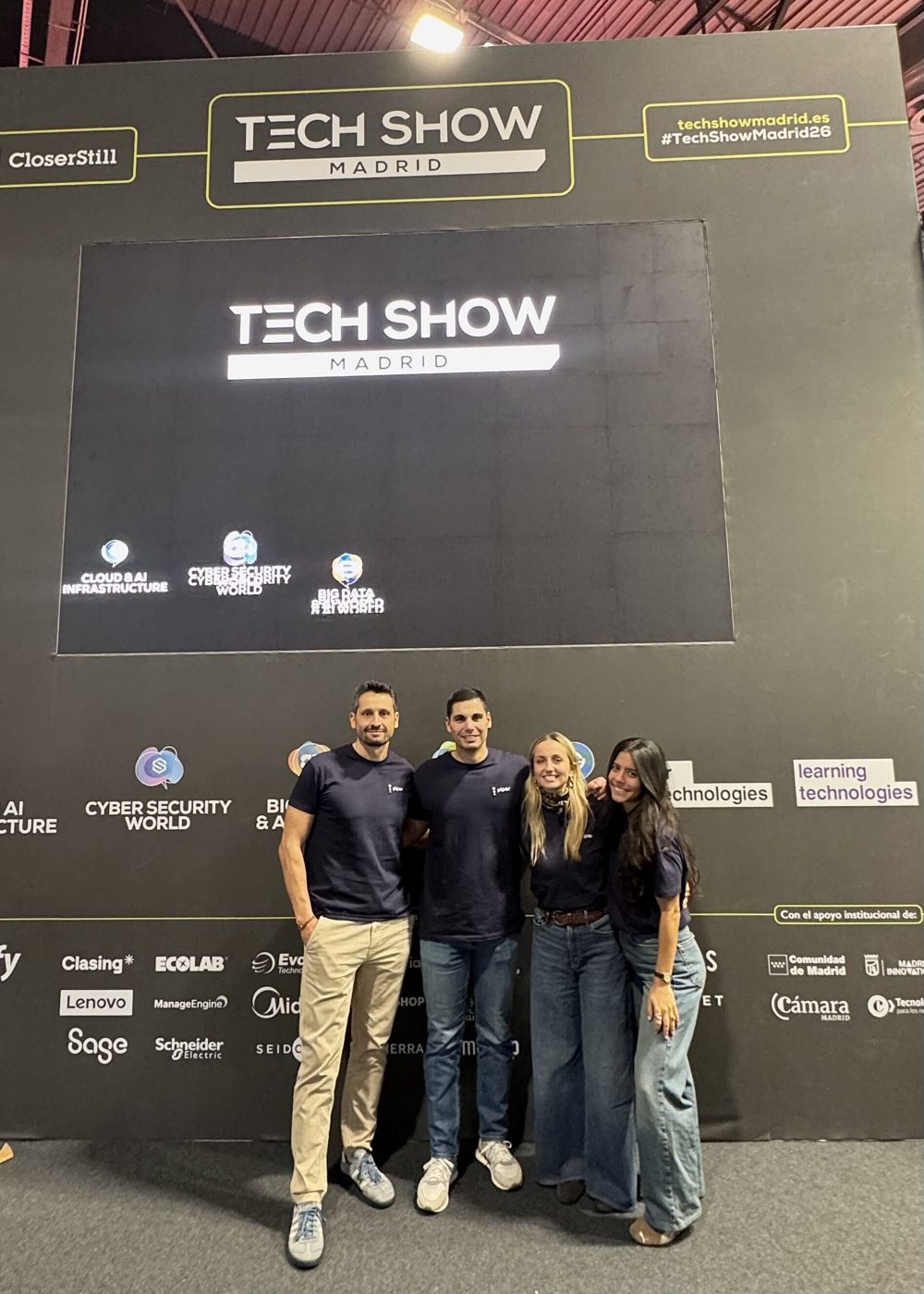
On November 4, we told this story together on stage at Tech Show Madrid. Michele Trevisiol, co-founder and CTO of Piper AI, joined Claudia Silva Baringo and Alonso de Mendoza from Shakers.
The takeaway: buy from your neighbors
Growing a startup is hard. Doing it alone is harder.
When close companies use each other's products, they scale faster. They improve their products with real feedback. And they build trust that outlasts any single deal.
The most popular tool on the market is not always the best choice. With a global vendor, you are one customer in a million. With a neighbor, you are a partner who shapes the product.
Europe has the talent and the startups. Now let's make buying from our neighbors the norm.
Thanks to Alonso, Claudia and the whole Shakers team for trusting Piper AI.